Meat Institute: MCOOL Amendment to Senate Farm Bill Raises Cost of Beef for Consumers
ARLINGTON, VA — Following the Senate Committee on Agriculture’s approval of the Senate Farm Bill, The Agricultural Act of 2026, the Meat Institute today said the amendment to impose Mandatory Country of Origin Labeling (MCOOL) on a struggling beef supply chain will raise already high costs of beef for consumers. Over 40 packer, processor and supplier members of the Meat Institute are participating in a fly-in this week to meet with Senators and Members of Congress from both parties, and with the Trump Administration to discuss strong opposition to MCOOL and other priorities.
“As we look ahead to consideration of the Farm Bill by the full Senate, the Meat Institute will continue to oppose MCOOL provisions because they raise the price of beef for American families,” said Meat Institute President and CEO Julie Anna Potts. “Consumers are paying more for beef than ever before. It is the worst time for Congress to interfere with markets, adding costs and bureaucracy to production by mandating how beef should be marketed to consumers.
“According to an economic analysis of MCOOL, it will raise the cost of beef for consumers by $835 million annually. Even though MCOOL would only apply to whole muscle cuts and ground beef sold at retail stores, implementing it requires segregation of all cattle and beef going through the supply chain, regardless of whether the final products are sold at retail, are processed, or sold at foodservice. Segregation, lost efficiency, and recordkeeping requirements drive the immense costs to the system.
“MCOOL is at cross purposes with efforts by the Trump Administration and the Congress to relieve the high price of food. MCOOL’s excessive costs are a threat to consumer demand which has sustained the entire beef supply chain through tough conditions.
“MCOOL could also jeopardize the Trump Administration’s ongoing trade negotiations with Cananda and Mexico which benefit the US economy as a whole. Canada and Mexico challenged MCOOL when it was previously in law, and they were authorized to retaliate against U.S. products with more than $1 billion in tariffs: they retain that right today.
“MCOOL is a misguided solution in search of a problem. Cattle producers have experienced nearly two years of exceptionally strong cattle prices, including record highs for fed and feeder cattle in 2025 and 2026. While the US herd rebuilds from historically small numbers, and consumers still demand high-quality beef, cattle producers will continue to benefit from strong market conditions. We need more cattle for more beef; not protectionist trade measures that will raise prices for consumers."
At issue is the Thune Amendment to the Senate Committee on Agriculture’s version of the Farm Bill, which requires the U.S. Trade Representative (USTR) and the Department of Agriculture (USDA) to determine a means of reinstating MCOOL for beef that is compliant with World Trade Organization rules. The USTR and USDA must implement the means of reinstating MCOOL for beef within one year.
The Bill now goes to the full Senate for debate and vote before it must be conferenced with the House version of the bill. The House Farm Bill, H.R.7567, the Farm, Food, and National Security Act of 2026, was approved in April and did not contain provisions related to MCOOL.
MCOOL Background:
The Meat Institute commissioned Decision Innovation Solutions to study the economic impact of MCOOL on the beef and pork value chains. It updates previous USDA and industry research using current production, trade, consumption, and market data to evaluate the potential impacts of reinstating the 2013 MCOOL requirements. The findings show that compliance costs associated with tracking, recordkeeping, product segregation, labeling, and verification would substantially increase costs throughout the beef and pork value chains. Read the full report here. One page summary is here.
Consumer Demand Insights:
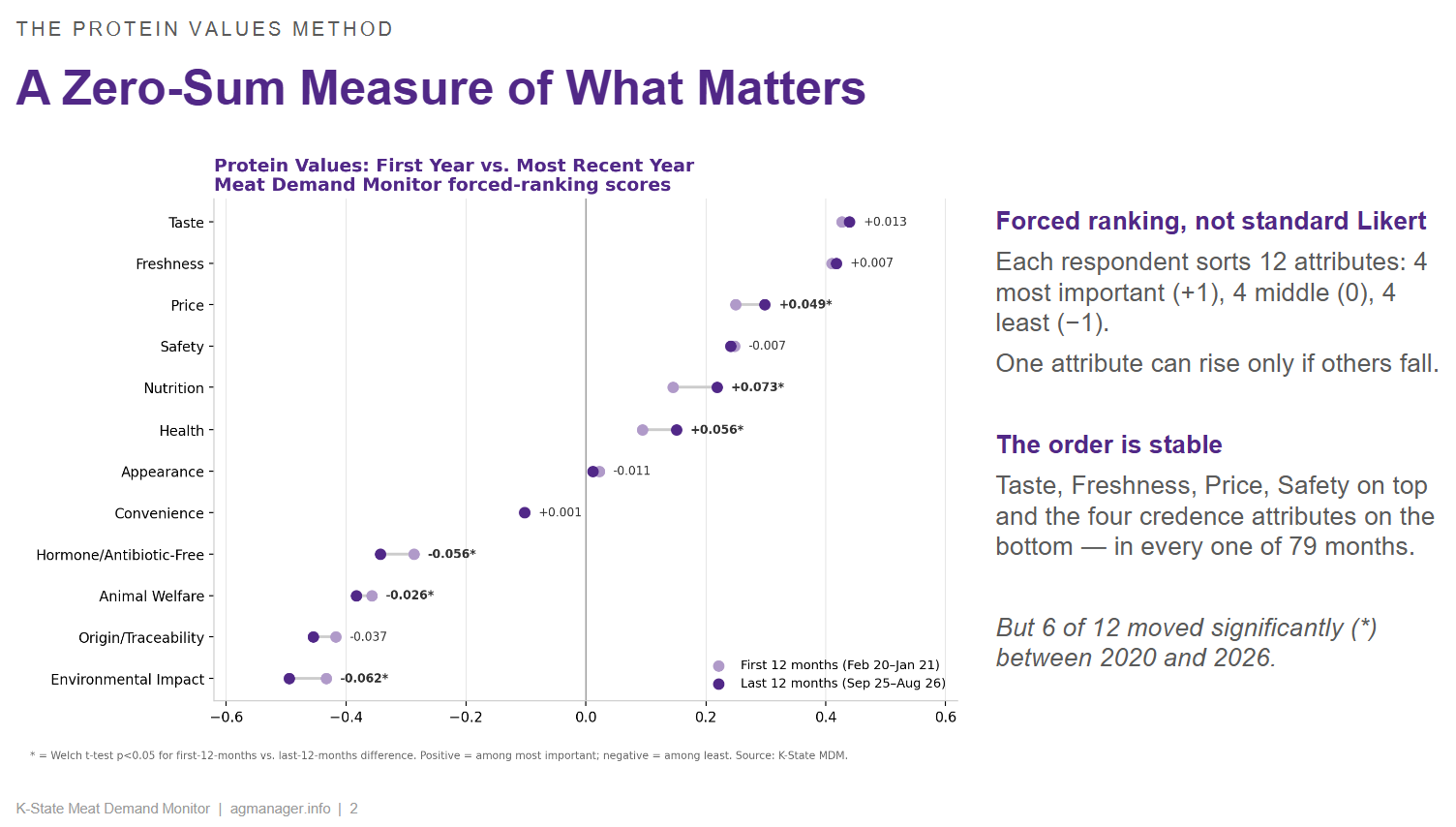
Dr. Glynn Tonsor’s Kansas State University Meat Demand Monitor has consistently found that taste, freshness, price, and safety have always been and continue to be what consumers are looking for when they purchase beef. Origin is of minimal importance to consumers making purchasing decisions coming in second to last in value over several years of data collection. Original chart below here.
Unintended Consequences of MCOOL Hurt Cattle Producers
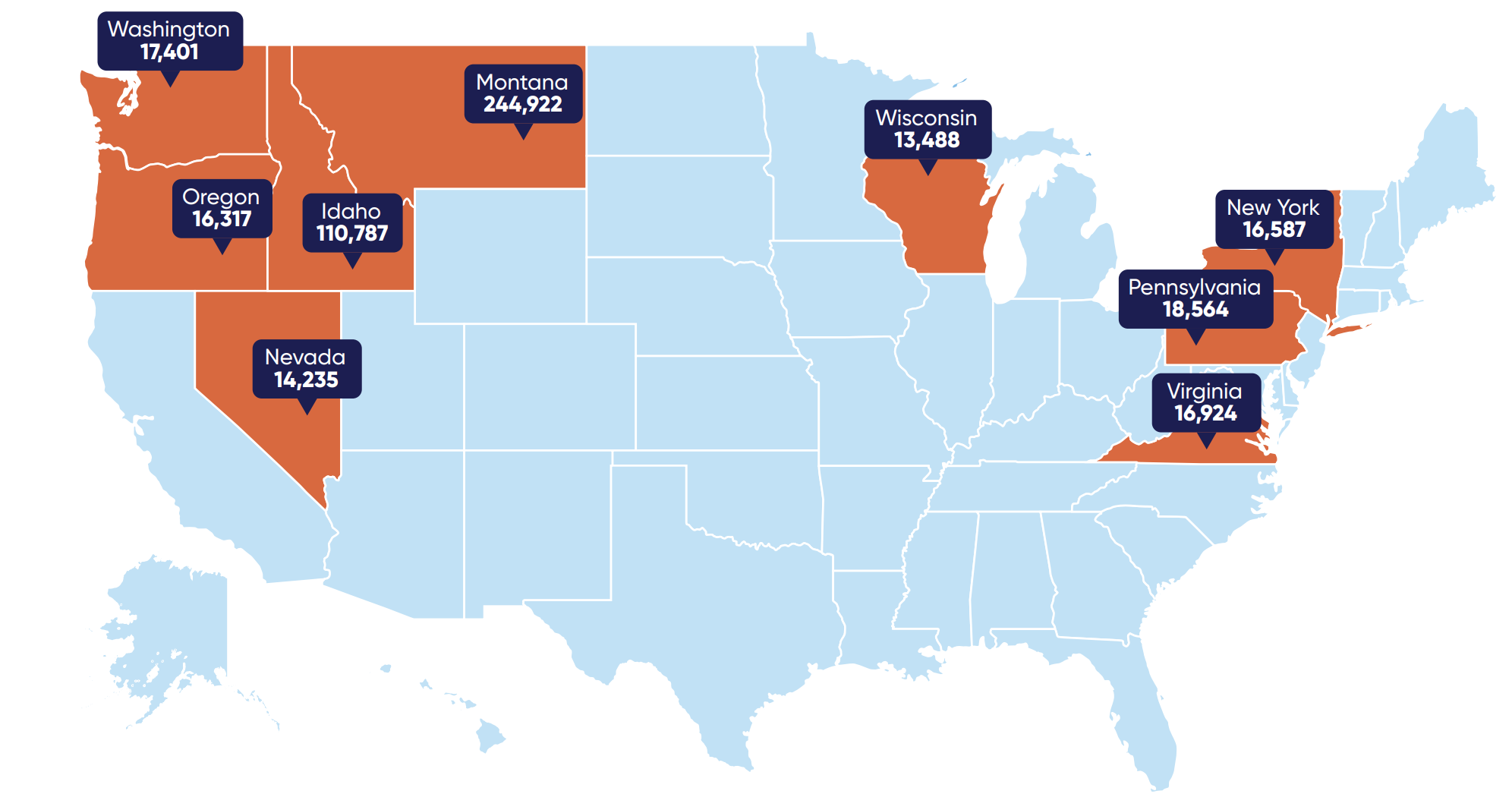
In 2025, the United States exported 544,524 cattle to Canada. Many were shipped directly to feedyards, and many then returned to the U.S. for processing. The North American cattle and beef industries are fully integrated, and the integration allows the U.S. to competitively process beef for Americans and the world. MCOOL stablishes a non-tariff trade barrier and hurts the U.S. producers who are exporting cattle to Canada. The following map shows where in the US cattle exported to Canada originated: (Washington, Montana, Oregon, Idaho, Nevada, Wisconsin, New York, Pennsylvania and Virginia)
About the Meat Institute
The Meat Institute represents the full community of people and companies who make the majority of meat American families rely on every day. The Meat Institute’s hands-on regulatory and technical expertise, proactive advocacy, unique convening power, collaboration within and beyond animal agriculture, and sector-leading continuous improvement initiatives drive relationships and resources that ensure meat continues to be a vital, trusted pillar of healthy diets and thriving communities for generations to come. To learn more, visit: MeatInstitute.org.